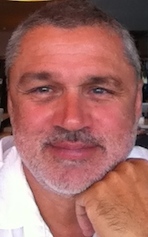
Nicolai Petkov: I stand for
job security
reduction of workload
balance of work and private life
stimulating creativity and quality
work that gives purpose and fulfilment
working environment that is a source of positive experiences
University Council elections |
|
Nicolai Petkov: I stand for
|
I am professor of computer science at the UG since 1991. My experiences as former institute director and since 2011 as member of the University Council and my international experience taught me what makes universities attractive for personnel.
Internationally there is a current trend to outsource support services. I am against this trend. We need good ICT, library, human resources, secretarial and facility services. This can best be achieved with loyal personnel that is on the RuG payroll. During the whole current mandate period, we upheld systematically and consistently this point of view in the discussions with the Board of the University. For instance, we insisted that the collaborators of Food and Drinks retain their permanent jobs with the university and our demands were satisfied. We were the only University Council faction that did not consent with outsourcing of logistic, post and archive, and grafimedia. How bitter right we were became clear when the company that got these activities decided to fire former RUG employees in violation of the outsourcing agreement.
Several excellent professors at our institute left us for a position elsewhere because they felt insecure about their future at the RuG. In one of these cases, a former colleague talked to the dean, after receiving an offer from another university. Specifically, he wanted a guarantee that he would not be affected by any future reorganisations and would have a secure job until his retirement (which was due in 15 years): that would enable him to bring up his young children. The dean helplessly told him that even he, the dean himself, did not have this kind of guarantee for his own professor position. Consequently that colleague left our university. This was a considerable loss for us and it took us eight years to find a good successor.
The recurring threat of reorganisations and forced lay-offs, due to sudden big financial deficits of faculties and the university, is a major source of anxiety and unrest. If we do not succeed in restoring trust in the security of a position at the university, we will not be able to attract and keep talented people. People are our main asset and this must be the leading principle in financial allocation decisions.
In the past two years I was persistently and assertively very critical on the imposed obligation to book trips via ATPI, vocalising in the University Council the complaints of many colleagues. I am glad that the University Board listened to our demands and recently weakened the restrictions.
You can read more about our views on the ineffectiveness of certain administrative actions in the following article:
Change the course evaluations (UK, 2017-04-26)
People differ in their qualities: one is extrovert and able to build a wide network, attract research grants and manage a large group; another one is introvert but comes up with that excellent new theory that will stay. We need them both. We do not need clones of the same type of manager-scientist that optimally fit in a system of rules that tends to favour quantity over quality. We need a diversity of qualities in people who excel in different dimensions. We need a system that facilitates and supports talent development instead of personnel management and control.
Elite US universities will start offering on-line educational programs and degrees worldwide to a large number of remote students. This may lead to a considerable drop in the number of students at other universities and may have devastating consequences for these other universities. Think of the disastrous effect internet had on the number of jobs for travel agents, journalists and accountants! We have to do with a disruptive educational technology change and a tsunami in higher education may be on its way. I already warned about this in a university council speech in 2012 and in the following press article:
Harvard's online tsunami is coming (UK 2013-05-14)
To those who say we have always had an ever-growing number of students and this will remain so, I will retell the story of Bertrand Russell's inductivist turkey: the turkey observed that it was duly fed every single day by its master, hence it happily concluded by induction that this would continue in the future. And it did ... until Christmas. Do we want to have a Christmas turkey on the (university canteen) table, or to become a Christmas turkey ourselves?
About the need for more democracy at the university
(Published in Universiteitskrant Groningen, UK 2015-02-17)
Student protests at Dutch universities in 1969-1972 led to a change of the law that gave students and staff rights of participation in university governance. These democratization changes of the early 1970s were abolished in 1998 with the introduction a new law, ironically named Modernisering Universiteitsbestuur (MUB). The emblematic occupation of the Maagdenhuis, governance center of the University of Amsterdam (UvA), in 1969 was ended by police force. Forty six years later students occupy an UvA building again. Their ultimatum starts with 'Universiteiten worden top-down bestuurd, wat academisch onderwijs en onderzoek ernstig schaadt. De inspraak van studenten en docenten is minimal.' The very first request of the students is 'Alle bestuurslagen van de Universiteit van Amsterdam dienen op democratische wijze te worden gekozen.' In a previous UK article titled 'The silence of the rabbits' (UK 2014-04-15, see below) I pleaded to overhaul the system by which we at the University of Groningen (RuG) select governors at all levels, be they directors of research institutes, deans, rector or president of the university.
In the current system, the president and the rector are not elected by staff and students, they are appointed by the Board of Trustees. The faculty deans are not elected either, they are appointed by the board of the university. On their turn, the deans appoint the directors of the research institutes. In this strictly hierarchical top-down system, the people who are being governed (staff and students) may not determine who governs them. This however is not a ruling of the current MUB law, it is a flaw of how the law is being applied.
A top-down system has pitfalls. For a boss, there is a personal incentive to appoint a sub-manager who is personally loyal to him and obediently does what the boss wants (Dutch: ja-knikker). This system rewards loyalty that points only upwards in the hierarchy. The sub-manager needs not be loyal to his subordinate staff, he can dump on that staff any decision that comes from above or any other measure that maximises his own personal convenience. One-way loyalty is damaging an organisation: staff need to trust their direct manager and consider him as a reasonable and fair governor who will protect them when necessary. If instead, they see him as someone to impose on them unpopular measures just to please his bosses or make his own life easier, such a manager will have no support (Dutch: geen draagvlak), and will therefore be not effective.
The Roman general Germanicus knew this: he was by far no democrat, but yet he would let his soldiers vote when he had to appoint a new centurion. Germanicus recognised that staff knows best who is most capable to be their line manager (Dutch: leidinggevende). All organisation management textbooks teach the same.
Then there is also the international aspect. We, the RuG want so passionately to be (seen as) an international university. However, colleagues from all over the world are stunned to hear that we do not elect our governors at any level and that our staff and students' opinion is not taken into account in such decisions.
As an alternative to the existing practice at the RuG, here is a sketch of the governor selection procedure followed by the elite French business school INSEAD:
1) there is a publicly known search committee that finds candidates,
(2) the nominated candidates present themselves, their ideas, vision and plans to a general assembly of all staff,
(3) all staff votes for the candidates of their choice and the result is announced publicly,
(4) that election result and the files of the candidates go to the board of trustees that takes the final decision and appoints a new governor.
The above sketched governor selection procedure can be implemented at all levels of our RuG within the current MUB law; no change of the law is needed, we only need a good will to modify the internal system of how we apply the law.
The UvA building occupation by students is symptomatic for the discontent with the state of university governance. Some problems can be fixed within the limits of the current law and must be taken care of on time before things get out of hand. Building occupations by students and demotivation of staff would put strain on research and education and damage the performance and image of the university.
Nicolai Petkov is professor of computer science and is proud to be a democratically elected member of the University Council
About the need for more democracy at the university
(Published in Universiteitskrant Groningen, 2015-05-11)
'Tchto delat?' (RUS; EN: What should we do?, NL: Wat moeten we doen?) is the title of the most influential book (1862) of the Russian philosopher Nikolai Chernyshevsky. Beyond its historical context of a feudal country struggling with transformation, its title became an emblematic question for the need of change sought by persons, organisations and societies.
Our university, as other Dutch universities needs a change. This is what the authors of an open letter with the title 'In Groningen heerst een cultuur van wantrouwen' (UK, 2015-05-08) convincingly state, naming a number of problems: bureaucratic micro-management, heavy workload, rat race for research grants (on this topic, read my article 'Russian roulette' below and discover the name of another great Russian author), top-down governance, unaccountable management, etc.
They ask the University Council (UR - Universiteitsraad) to respond to their letter. Since the UR is not one person and - fortunately - not one party that has one opinion as will become clear in the following, I respond on my own and on behalf of my party, the Science Faction (Wetenschapsfractie).
The list of authors of the open letter is topped by Mathieu Paapst, my colleague from the Science Faction. This should make clear our unconditional support for this open letter. I could stop here but this would not be enough.
The crucial question now is 'What should we do next?', after we have identified and named the problems. How can we achieve a change?
In a previous article 'We need more democracy' (UK, 2015-02-17), I pointed to the solution to the named problems: we need a new system of selecting governors and managers at all levels of the university.
The current top-down system of appointed, not elected managers has as a consequence that a manager needs to be loyal only to the boss who appointed him, and not to the staff under him. This system is damaging the organisation and it will not listen to the complaints of the mentioned open letter as they are directed against it.
In 2014, the UK published my article 'The silence of the rabbits' (UK, 2014-04-15), very timely in the context of an approaching appointment of a new rector. I suggested to the University Council to discuss the system for selecting governors with the Board of Trustees in our spring 2014 meeting, before the appointment of a new rector. Unfortunately, this proposal was not sufficiently supported by other factions.
In the autumn 2014 meeting of the UR with the Board of Trustees, I and our Science Faction suggested to the chairman of that board to adopt the system used at INSEAD (for details, read my article 'We need more democracy', UK, 2014-04-15). Our Science Faction also proposed this issue to be discussed in the meetings of the University Council and the Board CvB in the academic year 2014-2015 (as in previous years) but unfortunately this proposal did not get sufficient support by the other factions either.
Finally, in the February 2015 meeting of the UR and CvB, I openly and resolutely disagreed with the president of the university when he stated that 'under the current law it is not possible to have more democracy' and that '[for more democracy the law needs to be changed'.
I told him that the current law does not forbid us to have search committees (NL: zoekcommissies) for governing and management functions, and that if such committees existed now they are as visible as Nessie (the cryptozoological Loch Ness monster), Yeti (the abominable snowman) or an UFO (unidentified extraterrestrial flying object).
I also told him that the current law does not forbid us in any way to have at least two candidates for each such position.
And I told him that the current law does not forbid us either to allow staff to vote for the candidates for such positions, so that the voting result can be taken into account in the appointment procedure.
The quests for 'More democracy!' and 'Less bureaucracy!' are leading in the program of our Science Faction in the coming University Council elections (May 18-25).
As to Chernyshevsky, he got a 7-year heavy jail sentence (RUS: katorga, NL: TBS) and after the jail was sent to Siberia for the rest of his life. But his book changed a society - some scholars think that it 'supplied the emotional dynamic that eventually went to make the Russian Revolution'. And the emblematic question 'What should we do?' that it posed became a must for all people who want to make life better.
Nicolai Petkov is professor of computer science and is proud to be a democratically elected member of the University Council
About the current system of selecting university managers
(Published in Universiteitskrant Groningen, April 15, 2014)
In his article Kies die rector magnificus (UK of April 10), Peter Keizer opened an urgently needed discussion - for many of us hope for a change, for some a Pandora box. It is about the alleged (im)possibility to elect the rector of the university.
My first observation is that - surprisingly - this timely and important discussion is initiated by a journalist and not by a professor. I am afraid that this is a symptom of an academic disease long feared and anxiously awaited. Some ten years ago I warned a former dean of our faculty and a former rector that, if they treat the professors like rabbits, with time they will get rabbits as professors.
By which I mean that currently professors are defined (in various administrative documents) as employees (Dutch: werknemer, functionaris) that supervise large numbers of PhD students, publish many Nature and Science papers that receive numerous citations, and - most importantly - bring in gazillions of Euros from research grants. In the same system - in force since the introduction of the Law for Modernisation of University Management in 1998 - professors are not expected to have an opinion about science policy at large and the organisation of the university. If they had one, the current system offers no forum where it can be expressed.
In the Netherlands, we have the representatives of the people (Dutch: volksvertegenwoordigers) who are members of the national or a local parliament. They are called so because they are authorised in democratic elections by the people (Dutch: het volk) to represent them. Our deans are not elected by the professors and may not be called representatives of the professors, they are appointed by the board of the university.
On their turn, the deans appoint the directors of the research institutes who are the managers of the professors. In this strictly hierarchical top-down system, the people who are being managed do not determine who manages them, they have no saying in this at all, it is none of their business.
My interpretation of the term 'zoekcommissie' is that the committee has been lost (Dutch: is zoek): it is a non-existing, imaginary concept, a myth. I may say this after 23 years of experience as a full professor at this university, ten of which as scientific director of one of the largest research institutes: never ever during this time I have been approached by any zoekcommissie to ask me for my opinion on who should be the next director of the research institute, dean of the faculty or rector of the university.
I am curious how many of the 500 professors of this university had any encounter with a zoekcommissie. The fraction is certainly not larger than the fraction of people who have seen Nessie (the cryptozoological Loch Ness monster), Yeti (the abominable snowman) or an UFO (unidentified extraterrestrial flying object).
There is an urgent need to discuss over the mechanisms by which we come to decisions on who may steer (Dutch: besturen) the university or a part of it, be they directors of research institutes, deans or a rector.
We may not be degraded to and behave like silent rabbits.
Nicolai Petkov is professor of computer science and is proud to be a democratically elected member of the University Council
About the consequences of robotisation of higher education
(submitted to UK 2017-05-11)
After the driverless cars, professorless universities may follow.
Nicolai Petkov is professor of computer science and member of the University Council.
About the consequences of a disruptive technology change for universities
(Text of a speech in a meeting of the university council and the board of the university on August 30, 2012; published as 'Harvard's online tsunami is coming', UK 2013-05-14)
I would like to ask two questions. One of them is directed to the students, the other addresses the governing board of the university.
Question to the students: Imagine that you are enrolled in Harvard University. It is number one in all respected rankings. You follow their courses, make their examinations and, finally, you receive a degree from Harvard University. You do all this while you stay in Groningen, live in the same student house, have the same friends, go to the same pubs, and are member of the same student association and sport club.
You may ask: 'But how is it possible to follow courses at Harvard University while staying in Groningen?' My answer is: 'In the same way in which you can watch life a Richard Wagner opera in a cinema in Oldenburg while the opera is performed in Bayreuth, 700 km to the South.'
Some explanations may be due. Traditionally, the operas of Richard Wagner are played during the month of August in Bayreuth in Bavaria. Fans come from the whole world. Tickets are expensive - 400 Euro - and difficult to get. It helps if you have an aristocratic title, are high-level politician or a captain of industry. Dressing code is a smoking for men and a gala dress for women.
Last summer (2012), the Bayreuther-Festspeile, the company that organises these events, extended their business model. On August 11, the performance of the opera 'Parcifal' was transmitted to several hundred cinemas in Germany, Austria and Switzerland. There, the spectators could enjoy the performance in better quality of sound and vision, see more details and take a look behind the scene and in the dressing rooms of the star-singers. All this not for 400 but just for 26 Euro, including champagne. I tell you this story to point to the business model.
Elite universities, such as Harvard, Stanford, Berkeley, Princeton, MIT, Caltech, etc. are determined to introduce this business model in education. The president of Stanford University speaks of a 'tsunami' that is coming. By which he means that they will cause the tsunami and the other universities will suffer it.
My question to you, the students, is: 'Can you imagine that some of your colleagues, now with the University of Groningen, may find appealing the idea of getting a degree from Harvard, Stanford or Princeton in the described way?'
Now I address the Board. I have a PhD student who comes from Malta. He got his bachelor degree from the University of London. But he was not attending courses in London - he got his degree in Malta, while staying with his parents and enjoying the good weather. Similarly, I regularly get applicants for a PhD position from India with a degree form Carnegie-Mellon University. But they have not been in Pittsburg. They got their CMU degree in India.
Imagine that elite universities such as Harvard, Stanford, MIT and CalTech, start marketing their programs in Groningen. Imagine, that as a consequence, the number of students that enrol in the University of Groningen drops by, say 30%. The consequences for our university will be devastating. My question to you, the Board, is: 'How are we going to prepare ourselves for this tsunami?'
Nicolai Petkov is professor of computer science and member of the university council.
About the current system of research financing
(Published in Universiteitskrant Groningen, nr.7, October 6, 2011)
Imagine a Russian roulette game with six participants. There is a revolver with six chambers: one loaded with a bullet, the others empty. The players use the revolver in turn, each pressing the trigger once. We consider a player-friendly version of the game in which they point the revolver in the air; the original version has a less happy end and is not recommended here. The player who happens to release a shot is declared to be the winner and receives a prize of one million in a safe haven currency. Subsequently, the winner gets wide recognition in appreciation of his/her performance. As the game gains popularity, consultants start offering trainings and the winners are welcome speakers at various success-in-life and carrier-development events.
Let us now make the following Gedankenexperiment (a powerful tool for those who like to think): six participants reach the last phase of a research proposal evaluation round. We assume that all six participants are equally excellent. The outcome is not that each candidate carries home one sixth of the available money according to the uniform distribution of excellence. No, the winner takes it all; there is one winner, and five losers. The winner is declared a "top scientist", cozily abbreviated to "topper", by his administration, a qualification enthusiastically and frequently used by that administration as a proof of its own excellence and wisdom. In hindsight, explanations are found why he/she won. He/She is in the spot light and is invited to give talks on winning strategies and patronize future candidates. In short, he/she becomes 'A Hero of Our Time' -- by coincidence, this is Lermontov's novel where we find the only mention of the Russian roulette game in classic literature.
A whole industry arises where expensive consultants offer trainings in which you may be advised to study the hobbies of committee members - if you, for instance, drop the expression 'hole in one' during your presentation, this may win you the sympathy of a committee member who plays golf. No joke: such advice is given to Dutch barristers in their professional magazine. Now remember that we postulated our six candidates to be equally brilliant. The outcome was purely random and arbitrary. It was, maybe, just the aftershave/perfume smell of the winning candidate or his/her shirt tugged out at the back that pushed the bets in his/her favor. Of course, this explanation will be ironically dismissed as 'loser frustration' by the granting organisation, it will be experienced as ultimately offending by the winner, and it will be ferociously rejected by his/her administration as egalitarian disrespect for a genius. Similar behaviour is observed in business, arts and politics.
The accounts on the scientists-losers are much shorter: their prize is the Damocles sword above their heads, while waiting for tenure or promotion. According to Taleb, the art-losers are destined to serve you a cappuccino at Starbucks or a burger at McDonald's.
Before making the moral, let me re-tell you a story, the origin of which I forgot, maybe Taleb? Moshe prayed to God to help him win the lottery. He prayed every day, day after day. One day, just after saying his prayer and looking at heaven with a mixture of tired hope and threatening reproach, Moshe was stunned as heaven opened and God spoke to him: 'Moshe, do your part: do finally buy yourself a lottery ticket.'
Roles differ, so do morals. One for scientists: the current Zeitgeist requires you to to play the research grant lottery, unless you prefer to work at Starbucks or McDonald's. Another for administrators: you may be fooled by randomness when judging the quality of your scientists in terms of acquired money. Finally, a moral for policy makers: hazardous games should be abolished or at least radically restricted.
Recommended literature: N.N. Taleb: Fooled by randomness. Penguin, 2007.
Nicolai Petkov is professor of computer science and member of the university council.
About the current system of course evaluations
(Published in Universiteitskrant Groningen, April 26, 2017)
Student X never attends course A but under the mask of anonymity X whines about this course in the evaluation form. Student Y is pleased with the course but does not have time to fill in the evaluation form. So how can then anybody know the truth? Course evaluations in their current form hardly contribute to the quality of education.
It is time to reconsider the role of anonymous course evaluations by students and to find new, constructive and appropriate forms of student feedback and assessment of teaching quality.
Kristina Linke (FEB), Sreejita Ghosh (FSE), Nicolai Petkov (FSE), and Lorenzo Squintani (FL)About student enterpreneurship
(Published under a different title "Will wants to buy a company", given by the editor, in Universiteitskrant Groningen, nr.24, March 1, 2012)
400 million dollars is the venture capital Will West raised. He is founder and chairman of Control4, a worldwide market leader in home automation. This concerns devices that take care that the heating goes down when you leave home and up when you come back, or that your favorite music follows you through the house. Control4 want to grow, as fast as possible. And this is why Will was in Groningen on invitation of my well-connected colleague Marco Aiello. Will spoke with president Sibrand Poppema and dean Jasper Knoester. Will may decide to invest in our research, but the main reason he was here is to buy companies.
Imagine we had started a program in home automation ten years ago. Imagine it had produced 200 graduates and that some of them had started companies that were still out there, looking for ways to break through to a bigger, international market. Will would be keen to buy them. Does it sound unrealistic, like a dream? Let me then tell you another story.
Ten years ago, a young lecturer in the computer science (informatica) department of the University of Groningen, two PhD students and one master student founded a wannabe-high-tech company. They did not have much money to spend, so they decided to rent just one room in Beilen (30 km south of Groningen).
With the knowledge they got in image processing, computer vision and neural networks, they developed a system for automatic license plate recognition. This is a tough market with fierce competition. A few years ago they finally broke through and their company Dacolian became a market leader. Worldwide. Subsequently, Dacolian merged with stock exchange-noted Norwegian Q-free. Personally, this means that the founders no longer need to work. Well, they still work, as a challenge and for fun. And they employ 70 people, 30 of which graduates of the RuG, half of them with a PhD degree. Yes, in Beilen, a small place near Groningen. You do not always have to be in Silicon Valley for high-tech success stories.
How different this sounds from what I experienced first when I came to Groningen 21 years ago. I was preparing a European research proposal, and an elderly experienced colleague advised me to specify that Groningen is an economically underdeveloped region: this would increase the chances of getting a European grant. "Pleeease, help meee, I am working in an underdeveloped region."
Hmm, I never felt comfortable with that argument.
Recently the University of Groningen made a choice for a profile in Energy and Healthy Aging. We will start programs in these areas. In 5 years from now, we may produce 100 graduates per year. Some of them will start up companies and some of them - I am sure - will become very successful. And Will West, or another guy of his caliber, would come to Groningen eager to buy them. And our local guys may sell, or maybe not, maybe they will go themselves out to buy other companies in order to grow fast and remain leaders in their markets, worldwide, not just in Groningen.
Finally, a message to these future high-tech Energy and Healthy-Aging students: 'Come on guys, I do no longer want to read these stories of CalTech professors that became super-rich because they invested in the start-ups of their students. You do not always have to be in Silicon Valley for success stories.'
Nicolai Petkov is professor of computer science, member of the university council, and wannabe high-tech investor.